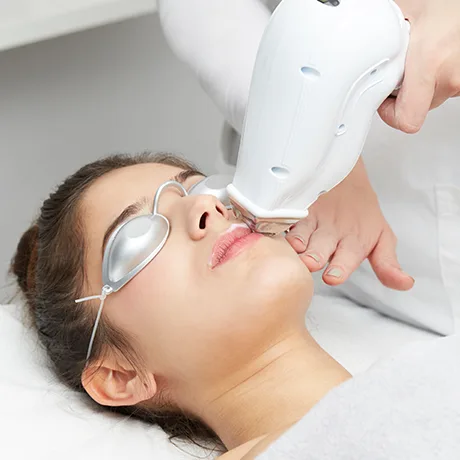
What is Fractional Laser?
What is fractional laser, what does it correct and what does it not correct?
Fractional laser is a laser treatment that treats small pinpoint areas of the skin while leaving intervening intact tissue rather than resurfacing the entire skin. The intact tissue surrounding the treated zones accelerates healing; as the skin repairs these spots it produces new collagen. Thus, depressed acne scars, fine lines, rough texture and the dull appearance from sun damage gradually improve. The term "fractional" describes how the energy is distributed across the skin rather than the specific laser type: CO2, erbium or various non‑ablative lasers can be applied in a fractional manner. Applications searched for as fractional CO2 laser, CO2 laser or laser skin resurfacing are therefore different members of the same family; the main differences between them are recovery time and the number of sessions.
Knowing what fractional laser does not correct is also important to set realistic expectations. Significant sagging and excess skin are not corrected by laser; expression lines arise from muscle movement, and cheek hollowness is due to volume loss. These concerns are evaluated separately for facelift, botox or fillers. Laser is not a skin‑lightening procedure. Any new or changing spot should be examined diagnostically before a cosmetic procedure.
Which laser approach for which complaint?
The fractional laser approach is chosen not by the device name but according to the depth of the problem, skin type and the time available for recovery. Non‑ablative treatments require multiple sessions with a short 1–3 day recovery; ablative treatments aim for a stronger effect but require 5–7 days of recovery after each session. The table below summarizes the general relationships; the personal plan is determined at the consultation.
| Finding | Commonly considered approach | Note |
|---|---|---|
| Rough texture, enlarged pores, fine lines | Non‑ablative fractional laser | Typically 3–5 sessions, 4–6 weeks apart |
| Deep depressed acne scars, marked texture changes | Ablative fractional laser (CO2, erbium) | Usually 1–3 sessions; recovery 5–7 days |
| Tethered rolling scars | Laser combined with subcision | Laser alone may be insufficient |
| Stretch marks (striae) | Fractional laser, multiple sessions | Newer stretch marks often respond better |
| Sun damage, uneven skin tone | Non‑ablative treatment or chemical peel | The type of spot is determined first |
| Melasma | Sun protection and topical therapy first | Heat can darken the pigment; laser is not the first choice |
| Dark skin, tendency to hyperpigmentation | Cautious settings with preference for non‑ablative treatment | Skin preparation may be needed beforehand |
| Active inflammatory acne | Treat acne first | Laser is planned once acne is controlled |
| Marked sagging and excess skin | Facelift evaluation | Laser does not remove excess skin |
Why are acne scar types evaluated separately?
Acne scars are not uniform and each scar type responds differently to fractional laser. Narrow deep, pinpoint‑like scars; sharply bordered boxcar scars; and scars with soft edges creating an undulating surface can coexist on the same face. Shallow scars with soft edges generally respond better to fractional laser, whereas narrow deep scars or scars adherent to the underlying tissue may not improve sufficiently with laser alone. Red or brown color changes left by inflammatory acne are not true depressed scars and often require a different approach. For this reason scars are assessed individually during the consultation and expected improvement is discussed for each scar type.
Why are skin tone, sun exposure and medications so important?
Skin tone is a major factor in determining the risk of post‑fractional laser pigmentation. In darker skin types or in skin prone to pigmentation, heat from the laser can cause darkening. This risk is reduced by using more cautious settings, pre‑treating the skin if needed, and strict sun protection. Newly tanned skin is not treated; avoid tanning for at least 4 weeks before and after the procedure and use at least SPF 30 sunscreen daily. People with a history of cold sores may require preventive treatment because laser can trigger an outbreak; the need for prophylaxis is decided by the physician. If systemic acne medication (isotretinoin) has been used in the last 6 months, or if retinoid creams are being used, these must be reported; medications should not be stopped on your own and timing is determined by the physician.
How is the session schedule organized?
The fractional laser schedule is planned backwards from the desired result timing and the recovery after each session. Since results become clear 3–6 months after the final session and non‑ablative sessions are performed 4–6 weeks apart, a plan that must meet a specific deadline should be started months in advance. For events such as a wedding, graduation or important meeting, place ablative treatment at least 6 weeks and non‑ablative treatment at least 1 week before the event; this prevents residual redness or dryness from coinciding with the day. Summer holidays and heavy sun exposure are also considered in the schedule; this is why autumn and winter are often preferred.
Can fractional laser be combined with other procedures?
Yes, fractional laser is often planned alongside other procedures such as subcision or fillers depending on the scar type for acne scarring. For expression lines consider botox, for mild laxity consider non‑surgical face lift techniques, and in some acne scars radiofrequency microneedling may be evaluated. Because the skin can be swollen after laser, injections are often scheduled for a separate day. Discussing multiple procedures does not mean all are necessary; at the consultation it will be explained which goal each suggestion targets and the proper sequence.
How to compare fractional laser offers?
When comparing fractional laser offers, look at what the overall plan covers rather than the price per session alone. Two procedures with the same name may involve different laser types, depths and numbers of sessions; a low price per session can become a different total when more sessions are required. Asking the following questions when requesting an offer makes comparison easier:
- Which laser type will be used; is it ablative or non‑ablative and why?
- How many total sessions are anticipated, what is the interval between sessions; is the price per session or for the whole plan?
- How many days off work and social life should I expect after each session?
- Who will perform the procedure; are anesthetic measures, care products, cold sore prophylaxis and follow‑ups included?
- What measures will be taken to reduce risks specific to my skin tone and type of spot?
Cosmetic fractional laser treatments are not covered by SGK; medical indications such as burn or wound scars are evaluated separately.
If you are coming from another city or abroad
Op. Dr. Hasan Büyükdoğan's clinic is on Bağdat Caddesi in Kadıköy on the Asian side of Istanbul. Patients traveling from other cities for non‑ablative fractional laser can usually return the next day; for ablative fractional treatments, staying in Istanbul for 5–7 days is recommended because of crusting and the first control. As sessions are planned 4–6 weeks apart, the visit schedule is arranged together from the start. Pre‑assessment photos can be shared via a secure method; however, skin type and scar characteristics become clear at an in‑person consultation. Consultations can be conducted in Turkish, English or German.
What the procedure can address
Not every patient receives the same treatment; the points below may be considered together or separately, depending on the person:
- 01Depressed (atrophic) acne scars
- 02Flat or depressed scars remaining after surgery, wounds or burns
- 03Fine lines around the eyes, mouth and cheeks
- 04Rough skin texture and prominent pore appearance
- 05Dull, uneven skin appearance from sun damage and some superficial spots
- 06Improvement of stretch marks (striae) in suitable candidates
Who may be a candidate?
Who may be a candidate?
Fractional laser is considered for adults whose concerns are related to the skin surface and texture: common indications include depressed acne scars, fine lines, rough texture, sun damage and stretch marks. There is no strict age limit; the decision is based more on skin type, the structure of the scar or spot and the time available for recovery. Better candidates are those with controlled active acne, who can protect their skin from the sun before and after the procedure, who disclose a history of cold sores and current medications, and who understand that multiple sessions may be required. In darker skin types and skin prone to pigmentation the laser type and settings are chosen more cautiously.
Who may not be suitable?
- Active infection, active cold sores or severe inflammatory acne in the treatment area
- Recently tanned skin or sunburned skin
- Pregnancy and breastfeeding
- Diseases that impair wound healing or a tendency to raised (keloid) scars
- Use of systemic acne medication (isotretinoin) in the last 6 months; timing is decided by the physician
- If the main problem is melasma; heat can darken the pigment so other treatments are considered first
- A new or changing spot that has not yet been evaluated
Fractional laser aims to make scars and textural irregularities less noticeable, not to remove them completely. It also does not correct sagging, excess skin, expression lines or volume loss.
The doctor's examination approach
The examination looks beyond appearance to the person's overall anatomy and expectations. Key points assessed:
- Complexion and tendency to pigmentation
- Depressed, flat or raised; depth
- Distinguishing sun spots from melasma
- Active acne and current medications
- Tanning and sun exposure habits
- History of cold sores and need for prophylaxis
- Previous lasers, peels and procedures
- Recovery time and upcoming events
The process
The fractional laser plan begins with an examination of the skin in daylight and from different angles; standardized photos are taken for comparison. The target concern, whether the proposed laser is ablative, the number and interval of sessions, expected recovery time after each session and the at‑home care plan are discussed clearly. If you have a wedding, holiday or a period of heavy sun exposure, the schedule is arranged accordingly. If there is a history of cold sores, the physician decides whether prophylactic treatment is needed; if you are taking acne medication, the physician determines the timing of the procedure.
-
1
Consultation and photographs
Skin type, scar and spot structure, active acne, current medications and prior procedures are evaluated.
-
2
Personal plan
Laser type, number and interval of sessions, recovery time and care plan are determined according to your schedule of events.
-
3
Preparation
Begin sun protection at least 4 weeks before; provide cold sore prophylaxis and skin preparation if needed.
-
4
Procedure
Topical anesthetic cream is left on for 30–60 minutes, the eyes are protected; facial application usually lasts 20–45 minutes.
-
5
At‑home care
Healing is monitored according to cleansing, moisturizing and sun protection instructions; do not pick at crusts.
-
6
Follow‑up and next session
Response is evaluated; in non‑ablative plans the next session is scheduled 4–6 weeks later.
Technique and medical approach
The method depends on the patient; no single technique suits everyone. Main points considered:
| Approach | Description |
|---|---|
| Non‑ablative fractional laser | Heats the underlying tissue without removing the skin surface. Redness usually subsides in 1–3 days; however, achieving results often requires 3–5 sessions 4–6 weeks apart. It is more frequently preferred in darker skin types and skin prone to pigmentation. |
| Ablative fractional laser (CO2, erbium) | Removes the skin surface in small pinpoint zones. It targets a stronger effect for deep scars and marked texture changes; usually 1–3 sessions are sufficient, but recovery after each session lasts 5–7 days and redness can persist for several weeks. |
| Combined approach for acne scars | For deep and tethered depressed scars, laser can be planned together with procedures that release the scar base such as subcision or with fillers. The same method is not applied to every scar type. |
| Application for stretch marks | In stretch marks the laser aims to reduce differences in texture and color to make the strip less noticeable. Newly formed pink‑purple stretch marks generally respond better than old white stretch marks; multiple sessions are usually required. |
| Regional application | Application can be limited to the periorbital area, perioral area or the scarred region instead of the whole face. Settings are chosen more cautiously for thinner‑skinned areas such as the neck, décolleté and hands. |
Preparing for the procedure
The points below are general information and do not replace personal medical instructions. Your own preparation is set at the examination.
Recovery
-
Procedure day
Initial day
There is a sensation similar to sunburn with warmth, redness and mild swelling; cold packs and recommended care products provide relief.
-
Days 1–3
First days
In non‑ablative treatments redness and swelling decrease and daily activities resume; makeup can often be started the next day with physician approval. The skin may feel dry and rough.
-
Days 3–7
First week
In ablative treatments crusting and peeling occur; do not pick at crusts. By days 5–7 a new skin surface forms; return to makeup and social life with physician approval.
-
Weeks 2–6
First weeks
Redness gradually decreases; avoid direct sun for at least 4 weeks. In non‑ablative plans the next session is scheduled 4–6 weeks later.
-
Months 3–6
Months
As collagen renews, skin texture and scars continue to improve; the result becomes clear after the final session.
After fractional laser the initial sensation is more like warmth and tightness similar to sunburn than severe pain. Do not pick crusts or disturb the skin; avoid pool, sauna and heavy sweating until the skin has healed and pay careful attention to sun protection. If increasing pain, yellow discharge, blisters, fever or cold sore‑like lesions occur, contact the team without waiting for the follow‑up appointment; if there is sudden serious signs such as visual change, seek emergency medical care.
Results and realistic expectations
The result of fractional laser is not completed in a single session; as the skin renews and collagen production increases, changes are seen gradually and become clear 3–6 months after the final session. Acne scars, stretch marks and textural irregularities become less noticeable; complete disappearance is not expected. The improvement is long‑lasting, but because skin aging and sun damage continue, sun protection is important to maintain results.
Risks and limitations
The risks of fractional laser are explained before the procedure according to your skin type and the recommended laser type. The most common are temporary redness, swelling and dryness. The risk of post‑treatment darkening is higher in darker skin types and in melasma; therefore settings are chosen cautiously, sun protection and skin preparation are important when needed.
- Prolonged redness and swelling
- Post‑procedural pigmentation (darkening), worsening of melasma or, less commonly, lightening of pigment
- Cold sore reactivation
- Bacterial infection
- Acne flares or small white cysts (milia)
- Burn, blistering and rarely permanent scarring
- Eye injury if the eyes are not protected
Alternative and complementary options
In some cases other methods may be considered. Each has its own limits and is not right for everyone:
| Method | Description |
|---|---|
| 1Chemical peeling | Renews the skin surface with chemical agents; considered for superficial pigment and texture issues, with limited effect on deep scars. |
| 2Microneedling and radiofrequency microneedling (golden needle) | Stimulates renewal by creating tiny channels in the skin; because it affects the surface less it can be an option for some acne scars and in darker skin types. |
| 3Fillers | Provide support for broad, soft‑edged depressed scars or volume loss; do not renew the skin surface. |
| 4Botox | Softens expression lines; has no effect on skin texture and scars. |
| 5Facelift | Repositions tissues for significant sagging and excess skin; laser does not remove this excess skin. |