What is Botox?
What is Botox, what does it correct and what does it not correct?
Botox is an application of botulinum toxin that temporarily reduces the nerve signal reaching selected muscles. Lines that form on the forehead when raising the brows, between the brows when frowning, and at the corners of the eyes when smiling deepen with the movement of these muscles; when movement is reduced the lines soften and the face looks more rested. The commonly used name "Botox" in everyday language originated from a brand name; various companies produce botulinum toxin products and the name of the product used should be recorded in the treatment record.
Knowing what Botox does not correct is important to set realistic expectations. Volume loss in the cheeks and temples, sagging of the jawline, excess eyelid skin, pigmentation and skin texture are not related to muscle movement. For these complaints dermal fillers, fractional laser, eyelid surgery or facelift may be considered separately.
For which complaints is Botox appropriate and when is another approach better?
Whether Botox is appropriate is determined by whether the complaint arises from muscle movement or from volume loss, skin or sagging. Two complaints described with the same word may have different causes: one person complaining about the eye area may mean the lines that form when smiling, while another may mean hollowness under the eye. The table below summarizes the general relationship; the personal plan is defined at the examination.
| Finding | Commonly considered approach | Note |
|---|---|---|
| Forehead, between-brow or eye corner lines seen only with movement | Botox | The effect is usually marked |
| Deep lines visible at rest | Botox together with filler or skin resurfacing | Botox alone may not be sufficient |
| Prominent jaw muscle, teeth clenching | Botox to masseter muscle | Dental evaluation may also be required |
| Hollowness in the cheek or under the eye | Filler or fat injection | Botox does not add volume |
| Excess eyelid skin | Eyelid surgery | Injections do not remove excess skin |
| Marked sagging of the jawline and neck | Facelift or neck lift | Surgical evaluation required |
"3-area", baby botox, permanent botox: what do these names mean?
Package and procedure names used for Botox usually describe the area, dose or target rather than a distinct method. Because the same name can be used with different scopes in different places, ask about the content rather than the name when receiving an offer.
| Name | What it usually means | What to know |
|---|---|---|
| 3-area Botox | Treatment of the forehead, between the brows and around the eyes together | All three areas are not necessary for everyone; dose varies per person |
| Baby botox, micro botox | Milder effect with lower doses | More movement is preserved; effect may be shorter |
| Mesobotox | Superficial application of a diluted product into the skin | Presented for pores and oiliness; evidence is limited and it does not replace mimic line treatment |
| Permanent botox | Claim of long-lasting effect | There is no such procedure; the effect of each application is temporary |
| Nefertiti botox | Application around the neck muscle bands and jawline | Reduces muscle pull; does not correct excess skin or sagging |
| Lip flip | Tiny dose to the muscle at the edge of the upper lip | Does not add volume to the lip; temporary changes in speech and when drinking through a straw may occur |
How are dose and injection points determined for a natural look?
A natural result with Botox depends on adjusting dose and injection points individually according to your facial movements. The forehead, brows and eyelids work together: someone with heavy eyelids may compensate by raising the brows and a high dose to the forehead can create a feeling of heaviness in the brows. Therefore attention is paid not only to the line but also to brow position and side-to-side differences. Dose units are defined separately for each product; one product's unit is not equivalent to another's. A dose or injection map used on a friend is not a ready-made plan for you. Choosing a cautious dose at the first session and adding a small supplement at the follow-up is often more predictable than applying a high dose at once.
How does Botox effect wear off and what happens when it is stopped?
The effect of Botox does not end in a day; it typically diminishes over 3–4 months, and in some people can last up to 6 months. Movement returns first, while lines may remain softer for a while; this explains why different sources list different durations. The effect may be shorter in strong muscles, very mobile areas such as around the mouth, and with low-dose applications. When Botox is stopped the muscles gradually return to their previous movement and lines approach their pre-treatment appearance; stopping does not accelerate aging or cause sagging. Repeat treatment is not mandatory; you decide whether to continue after assessment at the clinic.
Botox for excessive sweating and migraine
Botox is also used to temporarily reduce nerve signals to sweat glands in cases of excessive sweating. The effect in the underarm and palm areas varies between 3–10 months depending on the person and often lasts longer than facial applications; the cause of sweating is evaluated first. Botulinum toxin used for chronic migraine (15 or more headache days per month) follows a separate medical protocol; diagnosis and treatment decisions are made with neurology evaluation. Botox administered for expression lines is not a migraine treatment.
Can Botox be combined with other procedures?
Botox is most commonly planned together with dermal fillers: while Botox reduces movement, fillers support volume loss and deep lines. Fractional laser for fine lines and scars on the skin surface can be added in a separate session. Discussing multiple procedures does not mean all are necessary; at the examination each recommendation, its target and sequencing are explained. The general framework of non-surgical options is described on the Non-surgical Face Lift page.
Considerations for men and first-time patients
In men Botox is planned to preserve a straighter and lower brow position; injection points are chosen differently to avoid increasing brow arch and higher doses may be needed due to stronger muscles. For first-time patients, knowing that the effect starts in 3–7 days and is usually complete by about 2 weeks helps with proper timing before important events. If you had previous treatments elsewhere, share the date and product name. During the consultation, showing in the mirror which movement bothers you helps clarify the plan.
How to compare Botox offers?
When comparing Botox offers, look at what the offer includes before looking at the total price. Per-area or package prices cannot be compared if the product used and total dose are not specified. Asking the following questions when requesting an offer will help:
- Which areas will be treated; which areas are included in a "3-area" offer?
- What is the name of the product to be used; will the product name, dose and batch number be recorded?
- What is the total dose? Units of different products are not comparable.
- Who will perform the procedure; is consultation and medical assessment included?
- Is the 2-week follow-up and small additional dose, if needed, included in the price?
- Who and how can I contact in case of an unwanted effect?
For very low offers it is especially important to ask the product name and dose. Aesthetic Botox is not covered by SGK; cases with a medical indication such as excessive sweating are evaluated separately. Treatments performed with products bought online or in non-medical settings carry serious risks because the product source and dose are unknown.
If you are coming from out of town or abroad
Op. Dr. Hasan Büyükdoğan's clinic is located on Bağdat Caddesi in Kadıköy on the Asian side of Istanbul. Because no additional rest is required for Botox, patients coming from out of town usually can return the same day. Since the effect is usually complete in about 2 weeks, how the follow-up will be conducted is planned before the procedure; if there is an important event, the procedure should be scheduled at least 2 weeks in advance. Photographs can be shared securely for preliminary assessment; however, evaluation of facial movement is done in a face-to-face examination. Consultations can be conducted in Turkish, English or German.
What the procedure can address
Not every patient receives the same treatment; the points below may be considered together or separately, depending on the person:
- 01Horizontal lines on the forehead formed when raising the brows
- 02Vertical lines between the brows formed when frowning
- 03Crow's feet at the eye corners that form when smiling
- 04Slight brow tail lift, fine expression details at the nasal root and around the lips
- 05Prominence of the masseter (jaw) muscle and muscle tightness associated with teeth clenching
- 06Muscle bands that become prominent in the neck
- 07Excessive sweating in areas such as underarms and palms
Who may be a candidate?
Who may be a candidate?
Botox is considered for adults whose concern is lines caused or accentuated by muscle movement; it is not applied for aesthetic purposes under the age of 18. The decision is based more on facial movements, the nature of the line and expectations than on age: Botox has a more pronounced effect on lines seen only with movement, while deep lines visible at rest may not be fully treated with Botox alone. Suitable candidates are those who clearly share previous injections, medications and health conditions, and who want a more rested appearance rather than complete immobilization of their face.
Who may not be suitable?
- Pregnancy, breastfeeding or planned pregnancy in the near future
- Diseases affecting muscle and nerve transmission (for example myasthenia gravis)
- Active infection, inflamed acne or open wound in the treatment area
- Known allergy to botulinum toxin products or their components
- Botulinum toxin applied to the same area within the last 3 months
- The complaint is primarily due to volume loss, sagging or excess eyelid skin
Botox does not add volume, lift sagging tissue or remove excess skin. The goal is not to erase facial expression but to soften the bothersome movement and the resulting line.
The doctor's examination approach
The examination looks beyond appearance to the person's overall anatomy and expectations. Key points assessed:
- Muscle movement that creates the line
- Is it seen only with movement or also at rest
- Starting position and movement of the brows
- Eyelid heaviness and excess skin
- Muscle thickness and pulling force
- Right and left facial differences
- Previous treatments, product and date
- Expression you want to preserve
The process
The Botox plan is made by examining your face at rest and during movements such as brow raise, frown and smile during the consultation; photographs may be taken for comparison if needed. Which areas will be treated, the name of the product to be used, the total dose and the movements to be preserved are discussed clearly. Since a unit of dose is defined separately for each product, products cannot be directly compared; therefore no standard dose or injection points are given on this page. The plan is individualized and the product name and dose are recorded.
-
1
Consultation
Facial movements, the structure of lines, previous treatments, medications used and health information are evaluated.
-
2
Personal plan
Treatment areas, product, dose and the expression to be preserved are determined; expected effect and limitations are explained.
-
3
Preparation
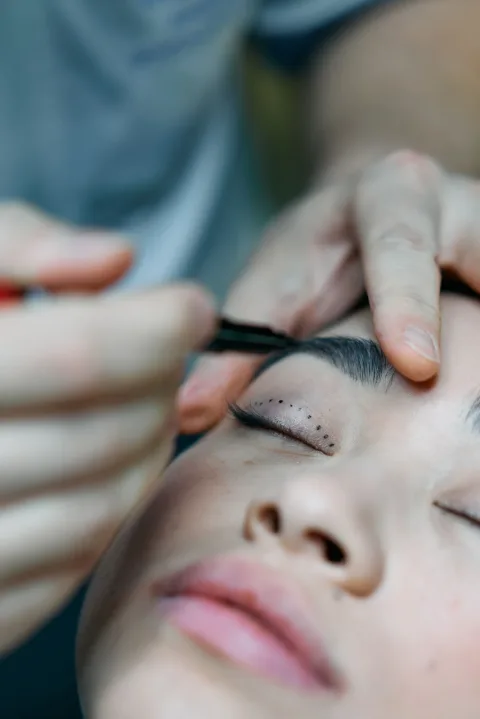
Skin is cleaned, injection points are marked; cold application or topical anesthetic cream may be used if necessary.
-
4
Procedure
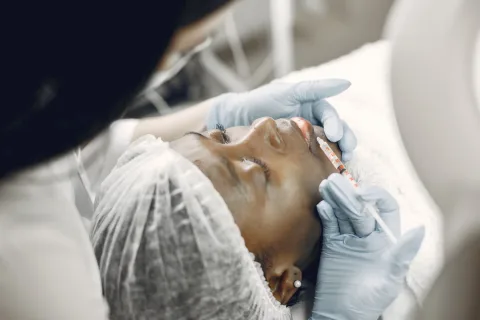
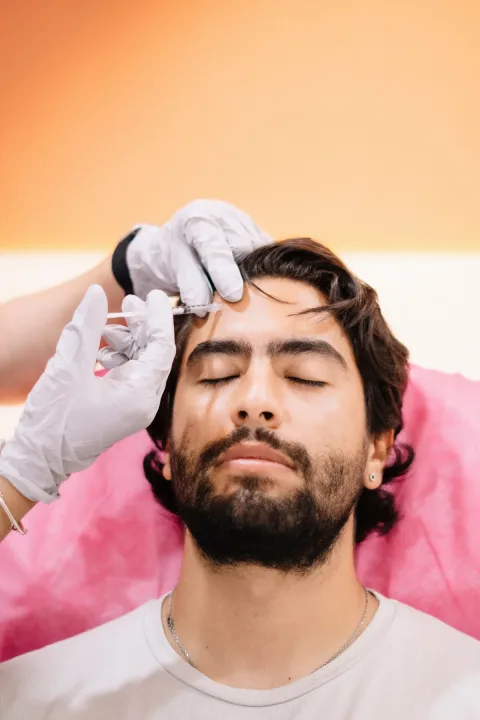
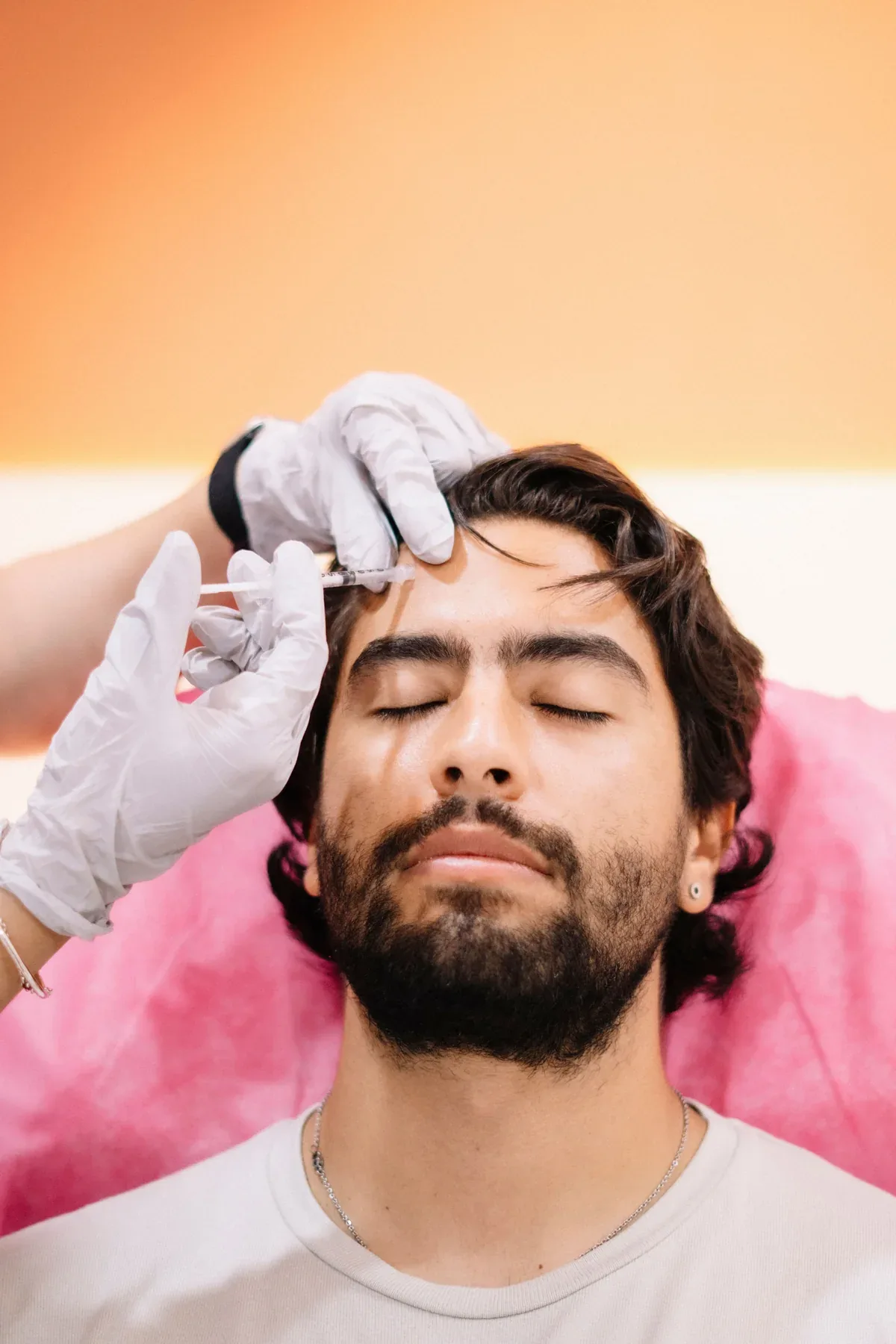
Injections are made into the planned muscles with a very fine needle; the procedure usually takes 10–20 minutes.
-
5
Post-procedure
Instructions such as not lying down for the first 4 hours and avoiding massage of the area for the first 24 hours are given; patients can return to daily activities the same day.
-
6
Follow-up
When the effect is complete, about 2 weeks later, symmetry and movements are evaluated together; a small additional dose is given if needed.
Technique and medical approach
The method depends on the patient; no single technique suits everyone. Main points considered:
| Approach | Description |
|---|---|
| Forehead and between the brows | Applied for horizontal forehead lines and vertical lines formed when frowning. To prevent brow heaviness the forehead and between-brow areas are planned together, taking brow position into account. |
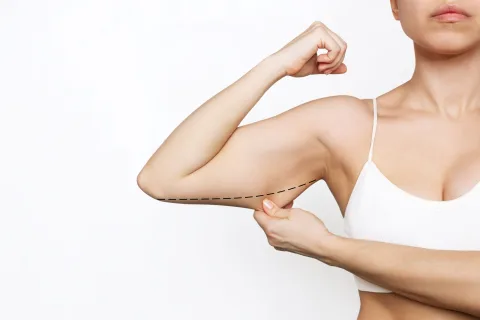
| Periorbital area (crow's feet) | Softens lines at the eye corners that occur when smiling. Dose and injection points are limited to preserve natural smiling; it does not correct under-eye bags or hollowness. |
| Brow tail, nasal root and perioral area | Can be applied in very small doses to slightly lift the brow tail, to treat lines at the nasal root, reduce downturned corners of the mouth or smooth fine lines around the upper lip. Because speech, smiling and drinking through a straw may be affected, planning is cautious; effects around the lips may be shorter-lived. |
| Jaw muscle (masseter) | Considered to reduce the bulk of a prominent jaw muscle over time or to relieve muscle tightness associated with teeth clenching. Slimming of the jawline occurs more slowly than mimic applications and is noticeable over weeks; dental assessment may also be required for teeth clenching. |
| Neck and lower face | Can be applied to soften prominent neck muscle bands and their pull toward the jawline. Results are limited if there is excess skin or marked sagging. |
| Excessive sweating | Temporarily reduces nerve signals to sweat glands in areas such as the underarms and palms; the effect varies between 3–10 months depending on the person. As this is a medical complaint the cause of sweating is evaluated first. |
Preparing for the procedure
The points below are general information and do not replace personal medical instructions. Your own preparation is set at the examination.
Recovery
-
Procedure day
First hours
Mild redness and small bumps at injection points resolve quickly. Do not lie down for the first 4 hours and avoid keeping your head bent forward for prolonged periods; do not massage or rub the area for the first 24 hours.
-
0–1 day
First day
You can return to work and daily activities the same day. Intense exercise, sauna, hammam and facial massage should be postponed until the next day. Wait a few hours before applying makeup and apply it without pressing on injection points.
-
3–7 days
First week
The effect begins to be noticed; any small bruises diminish. Changes may not appear at the same rate on both sides.
-
Around day 14
Second week
The effect is complete. At the follow-up symmetry and movements are assessed; if necessary a small additional dose is planned.
-
3–4 months
Months
Muscle movement gradually returns and lines become more pronounced again; in some people the effect can last up to 6 months. The decision to repeat the treatment is made at the consultation.
After Botox you are more likely to feel short-term tenderness at the injection points than pain; mild headache may occur. Post-procedure rules help the product remain in the planned muscle. If you notice drooping of the brow or eyelid, significant asymmetry or difficulty closing the eye, contact the team without waiting for the scheduled follow-up; if you have difficulty swallowing, speaking or breathing seek emergency medical care.
Results and realistic expectations
The result of Botox becomes clear in about 2 weeks: because the targeted movement is reduced the lines soften and the face looks more rested. The effect usually lasts 3–4 months, in some people up to 6 months, and diminishes gradually rather than in a single day; movement returns first and lines become more noticeable later. Duration varies with muscle strength, treatment area, dose and individual response. Deep lines visible at rest may not disappear completely; dermal fillers or skin resurfacing may be considered for these lines.
Risks and limitations
The risks of Botox are explained before the procedure according to the individual's health status and the treatment area. The most common side effects are redness, bruising at injection sites and mild headache; unwanted effects such as brow or eyelid drooping are temporary and efforts are made to minimize them with correct dose, accurate injection points and follow-up.
- Pain, redness, swelling, bruising at the injection site or temporary headache
- Temporary drooping of the brow or eyelid
- Asymmetry of the brows or unwanted arching
- Dryness or tearing of the eye with periorbital applications
- Temporary changes in smiling, speaking or chewing due to involvement of neighboring muscles
- Lack of expected effect or shorter-than-expected duration
- Allergic reaction
- Very rarely, spread of effect causing difficulty swallowing, speaking or breathing
Alternative and complementary options
In some cases other methods may be considered. Each has its own limits and is not right for everyone:
| Method | Description |
|---|---|
| 1Dermal filler | Supports volume loss and deep lines visible at rest; does not change muscle movement. |
| 2Fractional laser | Considered for skin surface, fine lines and scar appearance; no effect on mimic movement. |
| 3Eyelid surgery | Surgically removes excess eyelid skin; injections do not correct this excess. |
| 4Facelift | Surgery that repositions tissues in marked sagging; Botox does not correct sagging. |