What is Breast Lift?
What is a breast lift, what does it correct and what does it not?
Breast lift (mastopexy) is an operation that lifts sagging breast tissue and the nipple up and reshapes the breast by removing excess skin. It is also known as breast tightening or breast uplift. With pregnancy, breastfeeding, weight changes and ageing, skin loses elasticity, breast tissue descends and the nipple may shift toward the inframammary fold. In a lift the breast tissue is arranged higher and in a rounder form, and the areola is reduced if it is enlarged.
Understanding the limits of a breast lift is important to set realistic expectations. A lift alone does not significantly increase breast size; if volume loss is the main concern, breast augmentation is discussed separately or together. Large, heavy breasts can be reduced in volume with breast reduction, which also serves as a lift. Stretch marks on the remaining skin, small differences between the breasts and the shape of the chest wall are not completely corrected by lifting.
How is the degree of ptosis determined?
In a breast lift the degree of ptosis is determined by the position of the nipple relative to the inframammary fold. When standing with the arms at the sides, the inframammary fold under the breast is used as a reference line: if the nipple is at the level of this line the ptosis is mild, if below it is moderate, and if it reaches the lowest point of the breast and points downward it is marked. If the nipple is in place while breast tissue has slid below the fold, this is called pseudoptosis. This observation in front of a mirror gives an idea; the exact degree and plan are determined by measurements during the examination.
How is the incision pattern and implant decision made?
The incision pattern for a breast lift is chosen according to the degree of ptosis and the amount of skin that needs to be removed. Wanting a short scar is understandable; however choosing an incision that is insufficient to correct the ptosis will not achieve the expected shape. The table below summarizes the common relationship between examination findings and frequently considered approaches; the individual plan is determined during the consultation.
| Finding | Commonly considered approach | Note |
|---|---|---|
| Pseudoptosis: nipple in place, tissue below the fold | Limited tissue and skin removal from the lower pole or implant | Often nipple transposition is not necessary |
| Mild ptosis: nipple at fold level, enlarged areola | Periareolar (donut) lift | Scar at the areolar edge; limited lift |
| Moderate ptosis: nipple below the fold | Vertical (lollipop) lift | Breast is narrowed and elevated; no horizontal scar under the breast |
| Marked ptosis: nipple at the lowest point, excess skin | Inverted T (anchor) lift | Scar is longer; the horizontal component lies in the fold |
| Ptosis with significant volume loss | Lift with implant | Can be planned in the same session or staged |
| Large, heavy breasts | Breast reduction | Volume is reduced while lifting the breast during the same operation |
What can be done at the same operation as a breast lift?
The procedures most frequently planned with a breast lift are implants, fat transfer and abdominoplasty for postpartum changes. Liposuction can be added for fullness extending toward the armpit. After massive weight loss a breast lift can be combined with arm lift for excess skin under the arm or planned in stages; in these patients skin quality is weaker so weight stability is especially important. Additional procedures can complete the result but prolong operating time and recovery; whether each adjunct is truly necessary is discussed individually at the consultation.
Where will the breast lift scar be?
The breast lift scar remains around the areola, along a vertical line from the areola to the inframammary fold if needed, and in the inframammary fold. Because the periareolar scar lies at the transition between lighter and darker skin it tends to become less noticeable over time. The vertical scar lies on the breast surface and is the part most often noticed for longer; the horizontal scar is usually hidden within the fold when standing. Scars may appear pink and raised in the first months and mature and fade over 12–18 ay; during this time protecting scars from sun exposure and following recommended scar care is important. The final appearance of the scar also depends on wound healing, smoking and skin type.
Breast health and mammography
Assessment of breast health before a breast lift is part of the planning. Depending on age and family history a breast ultrasound or mammogram is requested; if any finding needs clarification the surgery is postponed until the process is completed. There is no evidence that a breast lift increases the risk of breast cancer. After surgery scar tissue or fat necrosis may produce small firm areas in the breast that can be seen on imaging. Therefore it is recommended to inform the radiologist of previous breast surgery and to bring your surgical report to subsequent screenings; routine breast screening continues after surgery.
What is different in patients with previous implants or lifts?
The plan for a breast lift in patients with prior breast surgery is made according to the previous method and the current state of the tissues. In patients who had an implant placed years earlier the breast tissue may have slid down in front of the implant; in this case implant exchange with a lift or implant removal and a lift are considered. In breasts previously lifted or reduced, prior incisions and how the nipple was transposed directly affect the new plan and the blood supply to the nipple. Bring the date of the previous surgery, the operation report, implant card if any, and imaging results to the consultation.
How to compare breast lift offers?
When comparing breast lift offers, look at what is included in the offer before comparing the total price. Two operations with the same name may involve different incision patterns, addition of implants and different services. Asking the following questions when requesting a quote helps you compare offers properly:
- Is the degree of ptosis and the suggested incision pattern stated in writing, and where will the scar be?
- Is an implant necessary; if so is the manufacturer and model specified in writing?
- Is areolar reduction included in the plan?
- Who will perform the operation, and are anesthesia and hospital fees included?
- Are preoperative tests, support bra, medications and follow-up visits included in the quote?
- What are the conditions for a possible revision if needed?
Cosmetic breast lift is not covered by SGK; situations with a medical indication are considered separately.
If you are coming from another city or from abroad
Patients coming from another city or from abroad are usually advised to stay in Istanbul for 5–7 gün after a breast lift. During this time drains are removed if present and the first check is performed. Op. Dr. Hasan Büyükdoğan's clinic is located on Bağdat Caddesi in Kadıköy on the Asian side of Istanbul. Pre-assessment photos can be shared via a secure channel; however photographs do not replace the in-person examination and the incision plan is made with measurements during a face-to-face visit. Consultations can be conducted in Turkish, English or German.
What the procedure can address
Not every patient receives the same treatment; the points below may be considered together or separately, depending on the person:
- 01Breasts that are sagging and deflated after pregnancy, breastfeeding or weight loss
- 02Nipple descended to the level of or below the inframammary fold, pointing down
- 03Pseudoptosis: breast tissue has slipped below the fold while the nipple remains in place
- 04Elongated, flattened breast shape with loss of fullness in the upper pole
- 05Enlarged areola
- 06Difference in position or shape between the two breasts
Who may be a candidate?
Who may be a candidate?
A breast lift is considered for individuals whose breast tissue and nipple have descended, who are in adequate general health for surgery and who have realistic expectations about scarring. Breast development should be complete (usually after 18) and weight should be stable; after breastfeeding it is generally advised to wait at least 6 months for the breast tissue to settle. If pregnancy or significant weight loss is planned in the near future, timing is discussed because these events may change the result. Smoking adversely affects nipple blood supply and wound healing, so candidates who can stop smoking are more suitable.
Who may not be suitable?
- Pregnancy or breastfeeding period
- Breast mass not fully evaluated, nipple discharge or a new breast complaint requiring assessment
- Continued smoking or nicotine use that cannot be stopped before surgery (increases risk to nipple blood supply and wound healing)
- Uncontrolled diabetes, hypertension or another medical condition that contraindicates surgery
- Planned pregnancy or large weight loss in the near future
- Expectation that there will be no scars
A breast lift is not a scarless operation and does not significantly enlarge the breast by itself. The goal is to position the breast higher on the chest and achieve a firmer, rounder shape.
The doctor's examination approach
The examination looks beyond appearance to the person's overall anatomy and expectations. Key points assessed:
- Position and orientation relative to the inframammary fold
- Degree of ptosis; true or pseudoptosis
- Excess skin, elasticity and stretch marks
- Existing volume and upper pole fullness
- Areola diameter and shape
- Differences in volume and position between the breasts
- Pregnancy, breastfeeding, weight, smoking, breast imaging and previous procedures
- Desired volume and acceptable scarring
The process
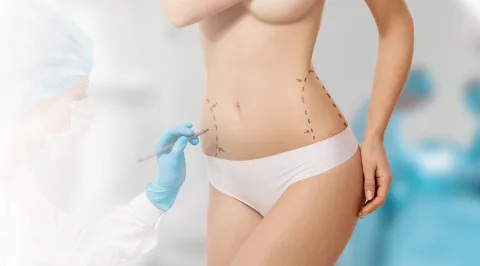
In planning a breast lift the nipple-to-inframammary fold position, excess skin and existing volume are measured and standard photographs are taken. Based on these findings the degree of ptosis, incision pattern (periareolar, vertical or inverted T), whether the areola will be reduced and whether an implant will be placed in the same session or staged are discussed. During the examination the new nipple position and the expected scars can be marked and shown. Preoperative blood tests, breast ultrasound or mammogram according to age and family history, and anesthesia assessment are performed before surgery.
-
1
Examination and measurement
Nipple position, degree of ptosis, excess skin and volume are measured; expectations and pregnancy plans are discussed.
-
2
Personalized plan
The incision pattern, areolar reduction and whether an implant is needed are determined; the expected scar is shown.
-
3
Preparation
Blood tests and required breast imaging are completed; instructions about smoking, medications and supplements are given.
-
4
Surgery
Performed under general anesthesia and usually lasts 2–3 saat; breast tissue is lifted and reshaped, the nipple is moved to its new position and excess skin is removed.
-
5
Discharge
Most people are discharged the same day or after one night wearing a support bra; drains, if present, are usually removed within 1–2 days.
-
6
Follow-up
The first check is within the first week; wound care, scar management and settling of the breast are followed with scheduled visits.
Technique and medical approach
The method depends on the patient; no single technique suits everyone. Main points considered:
| Approach | Description |
|---|---|
| Periareolar (donut) lift | The incision is only around the areola. Considered for mild ptosis and areolar reduction; the amount of lift and skin removal achievable with this method is limited. |
| Vertical (lollipop) lift | A vertical incision is added from the areola to the inframammary fold. Commonly used for moderate ptosis to narrow, elevate and reshape the breast. |
| Inverted T (anchor) lift | A horizontal incision along the inframammary fold is added to the lollipop incision. Used for marked ptosis and excess skin; the scar is longer but the horizontal component lies in the fold. |
| Implant-free lift and tissue-based support | The patient's own breast tissue is reshaped; in suitable patients lower-pole tissue can be folded upward to support the upper pole. The achievable fullness is limited by the patient's native tissue volume. |
| Lift with implant | If there is volume loss along with ptosis, an implant can be added to the lift. It can be planned in the same session or staged (lift first, implant months later); the choice depends on skin quality and the degree of ptosis. |
| Volume support with fat transfer | In suitable patients fat harvested from another area of the body can be transferred to the upper pole to provide limited volume. A portion of transferred fat is resorbed by the body; if pronounced volume is desired an implant is considered separately. |
Preparing for the procedure
The points below are general information and do not replace personal medical instructions. Your own preparation is set at the examination.
Recovery
-
0–1. gün
First day
Discharge the same day or after one night; support bra is worn and drains, if present, remain in place.
-
2–7. gün
First week
Drains are removed if present and the first check is performed; swelling, tenderness and numbness of the nipple are prominent. Rest on your back with the upper body slightly elevated; showering is according to the surgeon's instructions.
-
7–14. gün
First two weeks
Wound checks continue; if non-absorbable sutures were used they are removed in this period; most people return to desk work and social activities in 7–10. gün.
-
4–6. hafta
First weeks
The support bra can be discontinued; heavy exercise is resumed with the surgeon's approval.
-
3–6. ay
Months
The breast settles into place; the initially high and flat appearance softens and the final shape becomes clear.
-
6–18. ay
Long term
Scars mature and fade over 12–18 ay and become less noticeable; during this time protect the scars from sun exposure.
In the first days after a breast lift the sensation is more of tightness, tenderness and nipple numbness than severe pain; pain is usually controlled with prescribed medications. If you notice darkening or bruising of the nipple, rapidly increasing swelling in one breast, discharge or fever, contact the surgical team without waiting for the scheduled visit; seek emergency care for shortness of breath or chest pain.
Results and realistic expectations
The result of a breast lift becomes clear in 3–6 ay as swelling subsides and tissues settle; in the first weeks the breast may appear higher and flatter than the final result. The two breasts are never exactly identical; a lift can reduce positional and shape differences but small asymmetries may remain. Because gravity, pregnancy, breastfeeding, weight changes and ageing continue to exert effects, the result is long-lasting but not permanent; some re-drooping is expected over time and this is more noticeable with large, heavy breasts. Maintaining a stable weight and using a well-supporting bra help preserve the result.
Risks and limitations
The risks of a breast lift are explained before surgery according to the patient's health status and the incision plan. The most important procedure-specific concern is the blood supply to the nipple and areola; smoking, diabetes and marked ptosis increase this risk, so preparation and early follow-up are important. If an implant is added, implant-specific risks are discussed separately.
- Collection of blood or fluid under the skin (hematoma, seroma)
- Infection, wound separation or delayed healing (especially where incisions join)
- Temporary or permanent sensory changes in the nipple and breast skin; difficulty with breastfeeding
- Rare partial or full-thickness tissue loss of the nipple or areola
- Firmness in the breast due to fat necrosis
- Prominent, hypertrophic or widened scars
- Asymmetry, contour irregularities, recurrent ptosis and need for revision
- Anesthesia-related risks and thromboembolic events
Alternative and complementary options
In some cases other methods may be considered. Each has its own limits and is not right for everyone:
| Method | Description |
|---|---|
| 1Breast augmentation | In mild ptosis and when the main complaint is volume loss, implants can make the breast appear fuller; they do not correct marked ptosis or a significantly descended nipple. |
| 2Breast reduction | When breasts are large and heavy, reduction removes excess tissue while lifting the breast during the same operation. |
| 3Non-surgical lifting procedures | Energy-based devices and similar applications can have a limited effect on skin quality; they do not change nipple position or excess skin and do not replace surgery for marked ptosis. |
| 4Exercise and supportive bras | Strengthening chest muscles supports posture but does not lift sagging breast tissue which sits in front of the muscle. A well-supporting bra improves appearance under clothing but does not produce a permanent change. |