What is Eyelid Surgery?
What is eyelid surgery, what does it correct and what does it not correct?
Eyelid surgery (blepharoplasty) is an operation that reduces a tired appearance around the eyes by correcting excess skin on the upper eyelid and puffiness of the lower eyelid. In the upper eyelid, skin that loosens with age folds over the eyelashes; in the lower eyelid, the fat surrounding the globe can protrude forward creating a baggy appearance. Surgery can be applied to the upper eyelid, lower eyelid, or all four eyelids together.
Knowing what eyelid surgery does not correct is important for setting realistic expectations. Crow’s feet, dark circles under the eyes and fine superficial skin wrinkles are issues of the skin surface; applications such as botox, dermal fillers or fractional laser may be considered separately for these. Sagging of the cheeks and jawline is also outside the scope of eyelid surgery. Eyelid surgery does not change spectacle prescription or the shape of the eye; procedures aimed at changing the position of the lateral canthus, sometimes called “almond eye” techniques, are a separate matter.
Is a heavy-looking lid always excess skin?
There can be three different causes behind a heavy-looking upper eyelid: excess skin, lowering of the lid margin (ptosis), and descent of the brow. If only excess skin is present, upper eyelid surgery may be sufficient. If the lid margin descends toward the pupil, the problem involves the muscle that lifts the lid and requires a separate correction. If the brow has descended, removing only skin may pull the brow down further; in that case a brow lift is considered.
A simple observation in front of the mirror can give a hint: if lifting your brows slightly with your fingers greatly reduces the apparent heaviness of the lid, the brow position may also play a role; if the lid margin covers the upper part of the pupil when looking straight ahead, ptosis is suspected. This observation does not replace an examination; the three causes are assessed separately during the clinical evaluation.
Which eyelid technique is suitable for whom?
The approach to eyelid surgery is chosen according to which eyelid and which tissue is involved; in some cases surgery may not be necessary. The table below summarizes the general relationship between findings at examination and commonly considered approaches; the individual plan is determined at the consultation.
| Finding | Commonly considered approach | Note |
|---|---|---|
| Excess folding skin on the upper eyelid | Upper eyelid surgery | Incision in the eyelid fold; usually under local anesthesia |
| Lower eyelid bag with no skin laxity | Lower eyelid surgery via the inner surface (transconjunctival) | No external incision, no skin removal |
| Lower eyelid bag with excess skin | Lower eyelid surgery via the skin | Incision immediately below the lower eyelashes |
| Bag with an under-eye hollow | Fat repositioning | Fat is moved into the hollow rather than removed |
| Lid margin is low or brow is descended | Ptosis correction or brow lift | Removing skin alone will not be sufficient |
| No bag, only a shallow under-eye hollow | Under-eye filler or fat injection | Eyelid surgery may not be necessary |
What can “non-surgical eyelid aesthetic” do?
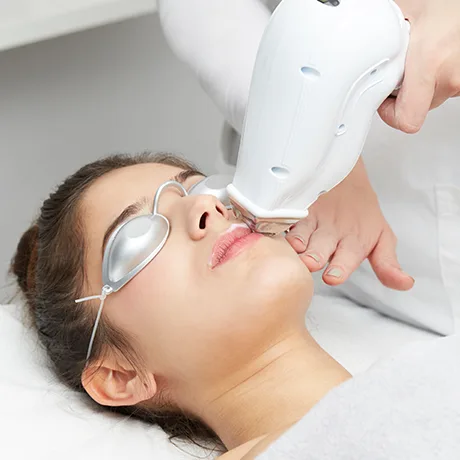
Procedures marketed as “non-surgical eyelid aesthetic,” such as plasma, radiofrequency and laser applications, aim to tighten the surface of the eyelid skin and can provide limited improvement in mild laxity. These procedures do not remove the fat that causes bags, do not eliminate pronounced skin folding over the lashes, and do not correct ptosis; their effects are limited and often need repeating. If there is obvious excess skin or a true bag, results are not the same as surgical correction. Which option is appropriate is discussed according to the condition of the eyelids at examination.
Why is dry eye and ocular health evaluated beforehand?
Ocular health should be known before eyelid surgery because the eyelids are structures that distribute tears across the eye surface and protect the eye. Dryness and tearing are common in the first weeks after surgery. People with preexisting dry eye, long-term contact lens use, prior refractive laser surgery, or thyroid eye disease may experience these symptoms more prominently. In such cases the amount of skin to be removed is planned more conservatively and a preoperative ophthalmology assessment may be requested.
What can be done in the same operation as eyelid surgery?
Procedures most commonly planned together with eyelid surgery are brow lift, facelift and fat injections to the cheeks and under the eyes. A facelift does not correct the periorbital area; eyelid surgery does not affect sagging of the cheeks and jawline. Therefore, if complaints exist in both areas, procedures can be performed in the same operation.
What is different for men and for secondary eyelid surgery?
In men the eyelid crease is often lower and brows are flatter; plans take this into account because removing too much skin can change the gaze. In patients who had previous eyelid surgery, the remaining skin amount, lower lid tension and previous incision locations determine the plan. In secondary surgery preventing downward pull of the lower lid is particularly important; it is helpful to bring information about the date and technique of the previous operation to the consultation.
Where does the eyelid surgery scar remain?
On the upper eyelid the scar lies within the natural eyelid crease, while on the lower lid it is immediately below the eyelashes; when the lower lid is approached from the inner surface there is no visible external scar. The upper eyelid scar is mostly hidden within the crease when the eyes are open and may be seen as a thin line only when the eyes are closed. Scar appearance depends on individual wound healing, sun protection and smoking habits.
Which season is best for eyelid surgery?
Eyelid surgery can be performed in any season; the important factor is choosing a period when you can comfortably pass the first two weeks. In summer, use dark sunglasses and a hat to protect incision sites and bruising from direct sun; avoid swimming in the sea or pool until incisions heal and the surgeon gives approval. If you have an important date such as a wedding, presentation or holiday, plan the surgery several weeks earlier to allow time for residual mild swelling to subside.
How to compare eyelid surgery quotes?
When comparing eyelid surgery quotes, check which eyelids and which procedures are included before looking at the total price. Two offers with the same name may differ: one may cover only the upper lids while the other includes all four lids and fat repositioning. When requesting a quote, ask:
- Which eyelids will be treated; upper, lower, or both?
- For the lower eyelid, will the approach be via the skin or the inner surface; will fat be removed or repositioned?
- Was ptosis or brow ptosis evaluated?
- What type of anesthesia is planned; are anesthesia and operating room fees included?
- Are ophthalmology assessment, drops, ointment and follow-up visits included?
- What are the conditions for a possible subsequent revision if needed?
Cosmetic eyelid surgery is not covered by social security. When excess eyelid skin narrows the field of vision, a medical justification may be evaluated separately; coverage and required documents vary by institution and insurer.
If you are coming from another city or from abroad
Op. Dr. Hasan Büyükdoğan's clinic is on Bağdat Caddesi in Kadıköy on the Asian side of Istanbul. Patients coming from other cities or from abroad are usually advised to stay in Istanbul for 5–7 days after eyelid surgery; during this period the first check is performed and sutures are removed. For preliminary assessment, photos of the eyes open and closed can be shared via a secure method; however, photographs do not replace an in-person examination and the definitive plan is made face to face. Consultations can be conducted in Turkish, English or German.
What the procedure can address
Not every patient receives the same treatment; the points below may be considered together or separately, depending on the person:
- 01Excess skin folding over the eyelashes on the upper eyelid
- 02Prominent fat fullness at the inner corner of the upper eyelid
- 03Under-eye bags on the lower eyelid
- 04A pronounced hollow at the lid–cheek junction (tear trough)
- 05Laxity and wrinkles of the lower eyelid skin
- 06Excess eyelid skin narrowing the upper visual field
Who may be a candidate?
Who may be a candidate?
Candidacy for eyelid surgery is assessed according to the findings of the eyelids rather than age: the procedure is considered if excess folding skin on the upper eyelid, lower eyelid bags or a tear trough disturb the patient and ocular and general health are suitable. These changes most often become apparent after age 35; hereditary under-eye bags may appear earlier. Patients who report a history of dry eye, the drops they use and prior eye treatments, and who have realistic expectations, are better candidates.
Who may not be suitable?
- Untreated significant dry eye or active ocular disease
- Uncontrolled thyroid eye disease, hypertension or diabetes
- Ongoing smoking or nicotine use that cannot be stopped before surgery
- Anticoagulant therapy that the physician deems unsafe to stop
- When the primary cause of complaint is lid margin droop (ptosis) or brow ptosis (a different operation is required)
- Complaints consisting solely of under-eye pigmentation
Eyelid surgery is performed to reduce a tired appearance while preserving the patient’s natural gaze, not to change the eye shape. New visual loss or acute eye symptoms should not wait for a cosmetic appointment and must be evaluated by an ophthalmologist first.
The doctor's examination approach
The examination looks beyond appearance to the person's overall anatomy and expectations. Key points assessed:
- Excess skin and eyelid crease
- Presence of ptosis
- Brow position and forehead relationship
- Bags and tear trough
- Elasticity and position of the lower eyelid
- Dryness, closure and vision
- Differences between the right and left eyes
- Previous eye surgery, laser and filler treatments
The process
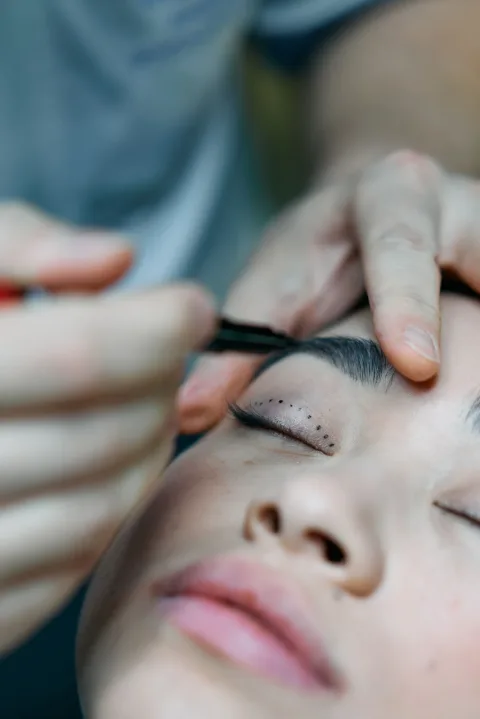
When planning eyelid surgery, the eyelids are evaluated with the eyes open, closed and in various gaze directions; brow position, lid margin height and lower lid tension are examined and standard photographs are taken for planning. Which eyelids will be treated, whether the lower lid will be approached via the skin or the inner surface, whether fat will be removed or repositioned into the tear trough, and the type of anesthesia are discussed clearly. If dry eye or visual complaints are present, a preoperative ophthalmology assessment may be requested.
-
1
Examination and photography
Eyelids, brows and eye health are evaluated; expectations and prior procedures are discussed.
-
2
Personalized plan
Which eyelids will be treated, incision location, whether fat will be removed or repositioned, and the type of anesthesia are determined.
-
3
Preparation
If needed, ophthalmology assessment and tests are completed; instructions are given regarding smoking, medications and supplements.
-
4
Surgery
Depending on the extent it usually takes 1–2 hours; excess skin and if necessary fat tissue are adjusted and the incisions are closed with fine sutures.
-
5
Same-day discharge
After a short observation the patient goes home with a companion; cold compresses, drops and ointment are prescribed for the first 48 hours.
-
6
Follow-up visits
Sutures are removed on days 5–7; recovery and dry eye are followed with scheduled checks.
Technique and medical approach
The method depends on the patient; no single technique suits everyone. Main points considered:
| Approach | Description |
|---|---|
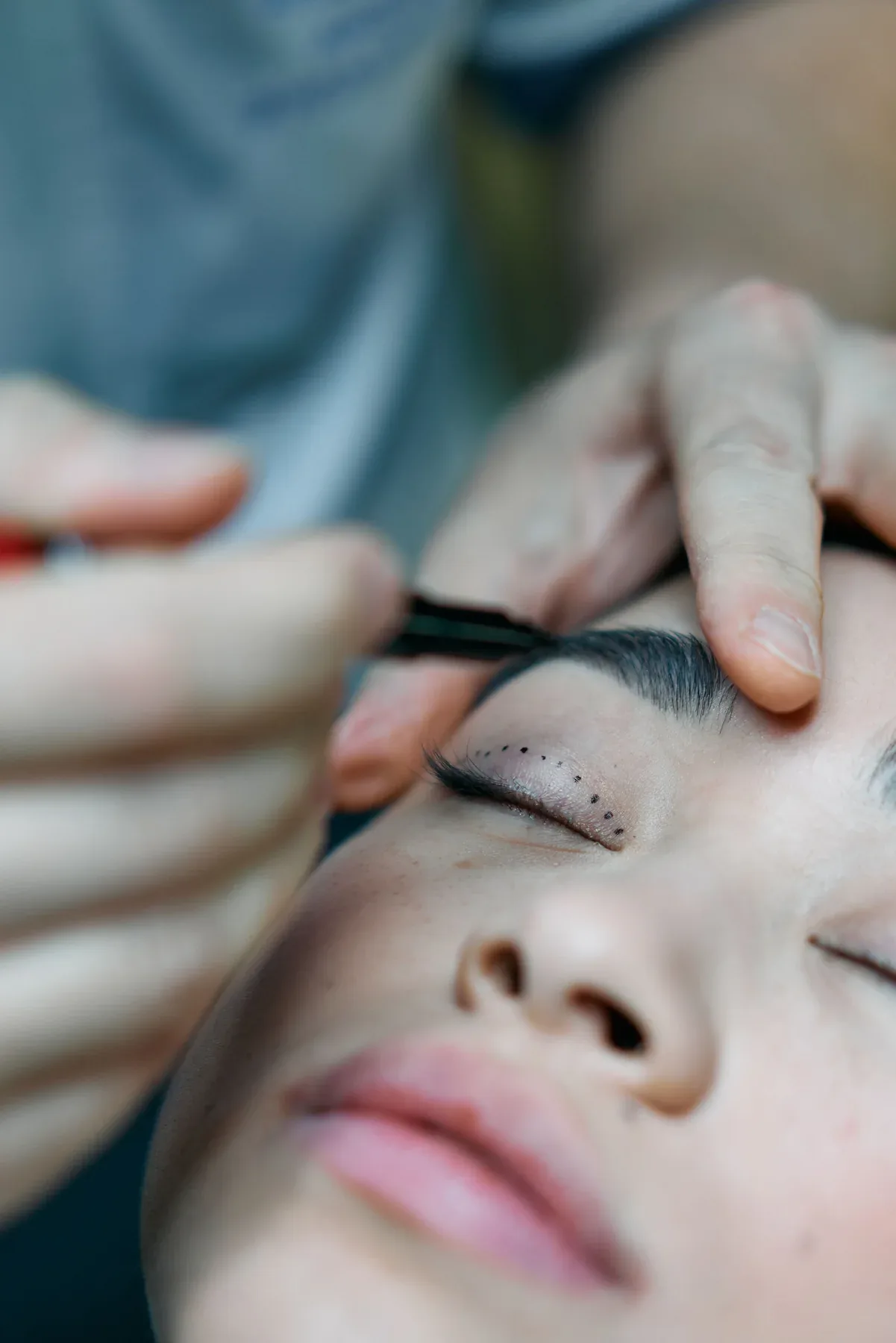
| Upper eyelid surgery | The incision is placed in the natural upper eyelid crease; excess skin and, if necessary, muscle and fat at the inner corner are reduced. It is mostly done under local anesthesia. |
| Lower eyelid surgery – via the skin | An incision is made immediately below the lower eyelashes. Considered when there is significant excess skin and laxity of the lower lid; if the lower lid is lax, the lateral canthus may be reinforced if needed. |
| Lower eyelid surgery – via the inner surface (transconjunctival) | The lower eyelid is approached from its inner surface to correct under-eye bags; there is no external incision and no skin is removed. It is suitable for patients without significant skin excess and for hereditary bags. |
| Fat repositioning | Instead of removing the fat that forms the bag, it is repositioned into the tear trough to soften the transition between the eyelid and the cheek. It is considered when both bags and hollows are present. |
| Ptosis correction and brow lift | If the problem is lowering of the lid margin or descent of the brow, removing skin alone will not be sufficient. These conditions are evaluated separately and may be planned in the same session as eyelid surgery if necessary. |
Preparing for the procedure
The points below are general information and do not replace personal medical instructions. Your own preparation is set at the examination.
Recovery
-
0–1 day
First day
Discharge the same day; keep the head elevated and apply intermittent cold compresses for the first 48 hours. Blurred vision, tearing and a feeling of tightness are expected.
-
2–7 days
First days
Swelling and bruising are most pronounced in the first days; sutures are removed on days 5–7. Use drops and ointment as instructed, and limit screen time and reading with short breaks.
-
7–14 days
First two weeks
Bruising usually decreases significantly within 10–14 days; most people return to desk work and social life in 7–10 days. Wait about 2 weeks before eye makeup and contact lens use.
-
3–4 weeks
First weeks
Residual mild swelling decreases; after 3–4 weeks heavy exercise may be resumed with the surgeon’s approval.
-
2–3 months
Months
The eyelids settle, early differences between the sides usually even out; the final appearance becomes clear.
-
3–6 months
Long term
Scars mature and become less noticeable within the eyelid crease.
In the first days after eyelid surgery the sensations are more of tightness, dryness, stinging and tearing rather than intense pain; pain is usually controlled with simple analgesics. Do not rub the eyes; use drops, ointment and cold applications only as instructed. Sudden vision loss, severe eye pain or rapidly increasing swelling in one eye require urgent assessment and should not wait for the scheduled appointment.
Results and realistic expectations
The result of eyelid surgery becomes clear over 2–3 months as swelling subsides: the upper eyelid appears more open, the under-eye area becomes smoother and the overall gaze looks more rested. The effect is long-lasting; however, aging continues and excess skin may recur in the upper eyelid over the years. Small natural differences between the two eyes may not disappear completely after surgery. Dark under-eye pigmentation, crow’s feet and skin quality may require additional treatments such as fillers, botox or skin procedures.
Risks and limitations
The risks of eyelid surgery are explained before the operation according to the patient’s ocular and general health. A significant part of the risk is related to the amount of skin and fat removed and the tension of the lower eyelid; therefore avoiding excessive tissue removal and knowing preexisting dry eye are part of the planning.
- Dry eye, stinging or tearing (mostly temporary)
- Temporary difficulty fully closing the eyes
- Lower eyelid retraction or eversion
- Bleeding within the eyelid; very rarely vision problems due to retrobulbar hemorrhage
- Sunken appearance under the eye due to excessive fat removal
- Asymmetry, differences in eyelid crease and need for revision
- Noticeable scar or small white cysts in the scar
- Infection and anesthesia-related risks
Alternative and complementary options
In some cases other methods may be considered. Each has its own limits and is not right for everyone:
| Method | Description |
|---|---|
| 1Under-eye filler | Can soften the lid–cheek transition in mild tear troughs; it does not remove bags or excess skin. Its effect is limited to months. |
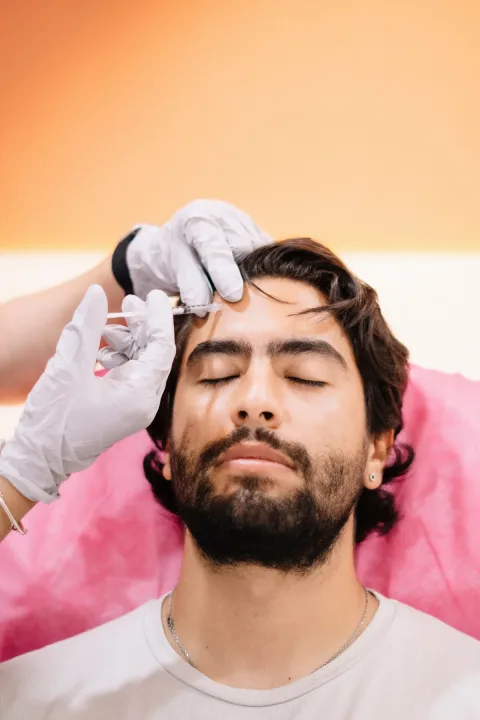
| 2Botox | Softens crow’s feet and can slightly lift the brow; it has no effect on eyelid skin excess or bags. |
| 3Fractional laser and skin treatments | Aim to improve skin quality and fine wrinkles of the eyelids; they do not remove the fat causing bags or pronounced excess skin and do not replace surgery in those situations. |
| 4Brow lift | If upper eyelid heaviness is caused by a descended brow, a brow lift alone or combined with eyelid surgery may be considered. |